
In This Report
Cloud App Adoption: Enterprise users in Manufacturing regularly interact with an average of 24 cloud apps each month. While the top used apps include the same popular enterprise apps used worldwide, we observed the increase of AI usage in corporate environments via apps such as Microsoft Copilot.
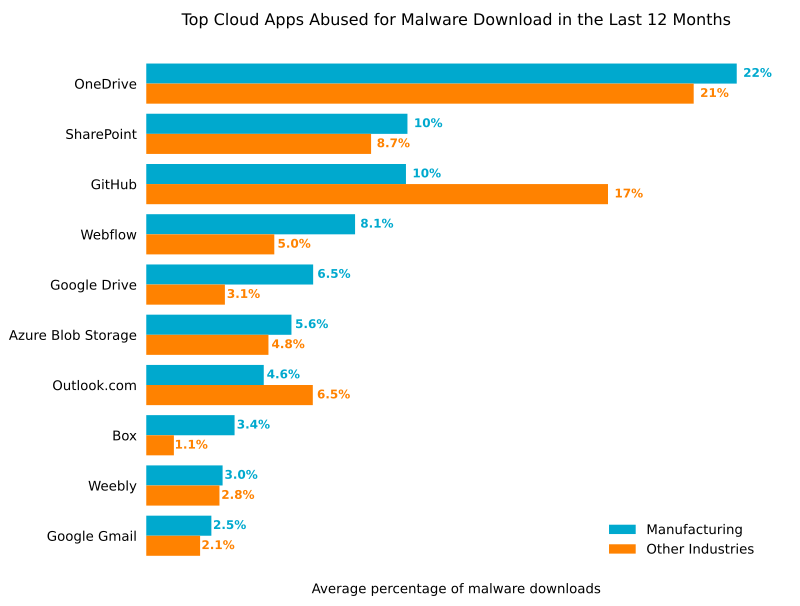
Cloud App Abuse: In Manufacturing, OneDrive is the top app being abused for malware delivery, with twice as much usage than the second and third place Sharepoint and GitHub respectively.
Malware & Ransomware: Among the most prevalent malware families targeting victims in Manufacturing were the Trojan RaspberryRobin and the Downloader Guloader.
Cloud App Adoption
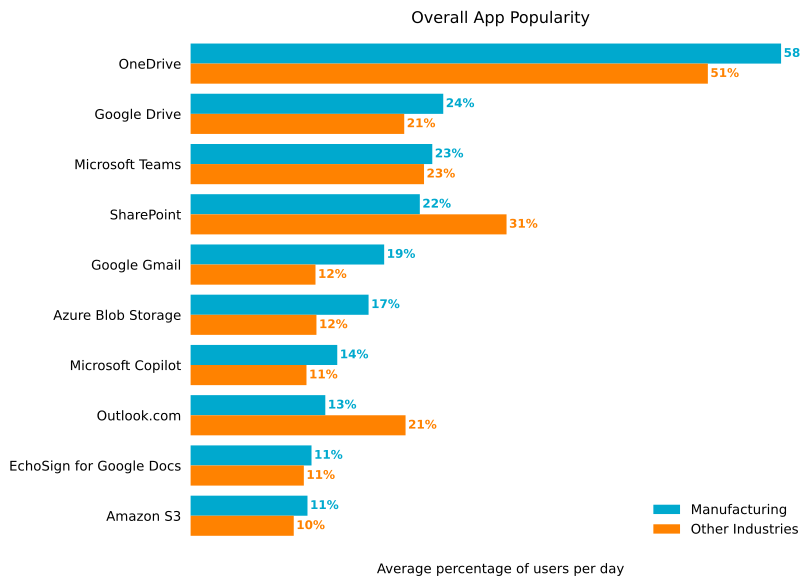
Cloud apps are ubiquitous in the enterprise, with the average user interacting with 24 different cloud apps every month. The most popular cloud apps in Manufacturing mostly follow broader global trends, with some noteworthy differences.
- Although Microsoft OneDrive is the most popular cloud app globally, we still observe a consistent preference for multiple other apps globally such as Google Drive, Microsoft Teams, and SharePoint.
- The general global interest in AI, is also evident in our graph below, where Microsoft Copilot not only shows up in the Manufacturing top 10, but also in the global top 5.
Using so many cloud apps, especially multiple apps with overlapping functions and combinations of enterprise and personal apps, underscores the importance of organizations in Manufacturing having policies to ensure the safe handling of sensitive data.
Cloud Apps Abused for Malware Delivery
Because adversaries deliver malware through many different channels, organizations in the Manufacturing industry must ensure that they have security controls to block malware downloads over the most popular ones. Approximately one-half of all global HTTP/HTTPS malware downloads originate from popular cloud apps, with the other half originating from different locations on the web. This section highlights the apps Netskope blocked the most malware downloads for over the past year.
The trend is for the most popular apps around the world are also among the top apps in terms of the number of malware downloads, reflecting adversary tactics (adversaries tend to abuse top apps because of their popularity), user behavior (users interact with popular apps more frequently), and organizational policy (organizations tend to allow popular apps). Differences also arise based on those exact same three factors.
In Manufacturing, most of the cloud apps had a similar rate when it comes to malware abuse. OneDrive specifically had around twice as many percentage points when compared to other apps. From this trend, we can conclude that not only attackers have been having success delivering malware via OneDrive, but Manufacturing users should also take extra precautions when using the app, and make sure the correct policies are in place.
Top Malware Families
This list contains the top five malware and ransomware families detected by Netskope targeting users in Manufacturing in the last 12 months:
- Downloader.Guloader is a small downloader known for delivering remote access Trojans (RATs) and infostealers, such as AgentTesla, Formbook, and Remcos.
- Infostealer.AgentTesla is a .NET-based RAT with many capabilities, such as stealing browsers’ passwords, capturing keystrokes, clipboard, etc.
- Phishing.PhishingX is a malicious PDF file used as part of a phishing campaign to redirect victims to a phishing page.
- Trojan.Grandoreiro is a LATAM banking Trojan with the goal of stealing sensitive banking information, commonly targeting users in Brazil, Mexico, Spain, and Peru.
- Trojan.RaspberryRobin is widely used to spread other malware families, including IcedID and Clop, and has been spread in 7z, LNK, MSI, and other formats.
Recommendations
This report highlights increasing cloud adoption, including increased data uploaded to, and downloaded from, various cloud apps. It also highlights an increasing trend of attackers abusing various cloud apps, especially popular enterprise apps, to deliver malware (mostly Trojans) to their victims. Netskope Threat Labs recommends organizations in Manufacturing review their security posture to ensure that they are adequately protected against these trends:
- Inspect all HTTP and HTTPS downloads, including all web and cloud traffic, to prevent malware from infiltrating your network. Netskope customers can configure their Netskope NG-SWG with a Threat Protection policy that applies to downloads from all categories and applies to all file types.
- Ensure that high-risk file types like executables and archives are thoroughly inspected using a combination of static and dynamic analysis before being downloaded. Netskope Advanced Threat Protection customers can use a Patient Zero Prevention Policy to hold downloads until they have been fully inspected.
- Configure policies to block downloads from apps and instances that are not used in your organization to reduce your risk surface to only those apps and instances that are necessary for the business.
- Configure policies to block uploads to apps and instances that are not used in your organization to reduce the risk of accidental or deliberate data exposure from insiders or abuse by attackers.
- Use an Intrusion Prevention System (IPS) that can identify and block malicious traffic patterns, such as command and control traffic associated with popular malware. Blocking this type of communication can prevent further damage by limiting the attacker’s ability to perform additional actions.
- Use Remote Browser Isolation (RBI) technology to provide additional protection when there is a need to visit websites that fall into categories that can present higher risk, like newly observed and newly registered domains.
Netskope Threat Labs
Staffed by the industry’s foremost cloud threat and malware researchers, Netskope Threat Labs discovers, analyzes, and designs defenses against the latest cloud threats affecting enterprises. Our researchers are regular presenters and volunteers at top security conferences, including DefCon, BlackHat, and RSA.
About This Report
Netskope provides threat protection to millions of users worldwide. Information presented in this report is based on anonymized usage data collected by the Netskope One platform relating to a subset of Netskope customers with prior authorization. This report contains information about detections raised by Netskope One Next Generation Secure Web Gateway (SWG), not considering the significance of the impact of each individual threat. Stats in this report are based on the period starting Sep 1, 2023 through Aug 30, 2024. Stats are a reflection of attacker tactics, user behavior, and organization policy.