

In This Report
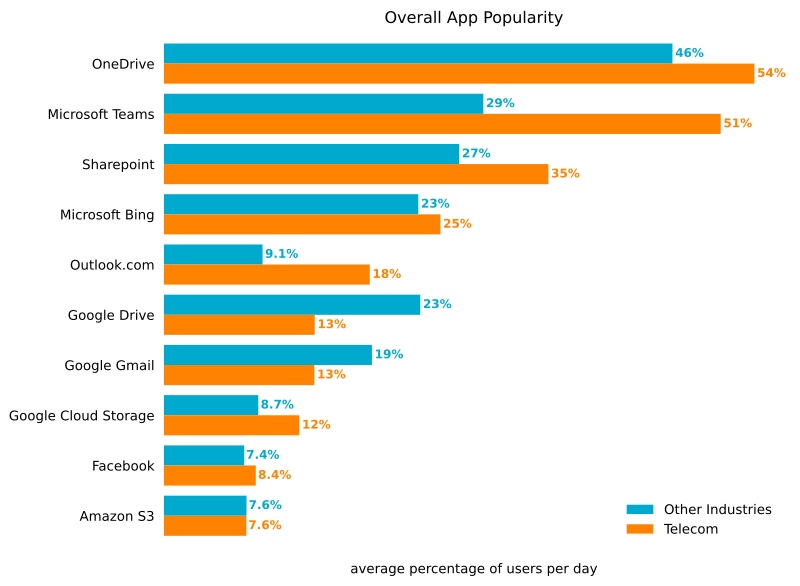
Cloud App Adoption: The average user in the telecom industry interacts with 24 different cloud apps per month, which is on par with other industries. The Microsoft apps OneDrive, Teams, SharePoint, and Outlook.com are all more popular in telecom, while the Google apps Drive and Gmail are all less popular.
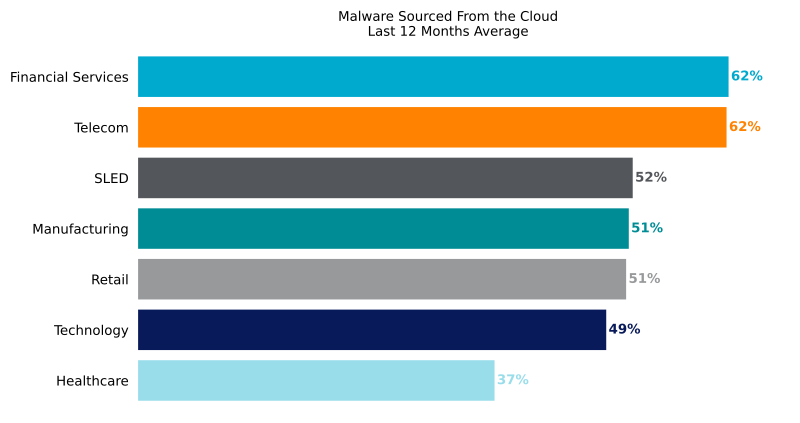
Cloud App Abuse: The telecom industry ties the financial services industry for having the highest percentage of cloud malware downloads. The top 10 apps with malware downloads are the cloud storage apps Microsoft OneDrive, Azure Blob Storage, Google Drive, and MediaFire.
Malware & Ransomware: Trojans dominated malware downloads from the cloud and web, led by FormBook, Razy, and Valyria. Other top malware families targeting telecom organizations included the Ako ransomware, the PonyStealer infostealer, and the Zusy backdoor.
Cloud App Adoption
Cloud app adoption continues to increase in the telecommunication industry, with enterprises using cloud apps to improve productivity and enable hybrid workforces. The number of apps a user in telecom interacts with has increased from 22 to 24 apps over the past 12 months, in-line with other industries. The top 1% of users interacted with 76 apps per month on average, below the average of 95 apps in other industries.
 Users in telecom downloaded data from cloud apps at a slightly higher rate than other industries, with 95% of users downloading data from cloud apps in telecom, compared to 93% in other industries. Telecom led other industries by an even larger margin in uploads, with 74% of users uploading data monthly compared to 65% in other industries.

Most Popular Cloud Apps
OneDrive is the most popular app in the telecom industry by a large margin, with 54% of all users accessing OneDrive each day, compared to 46% of users in other industries. Other Microsoft products including Teams, SharePoint, and Outlook.com are also more popular in the telecom industry. By comparison, Google Drive and Google Gmail are less popular, and other apps enjoy comparable popularity to other industries.
Top Apps Used for Uploads
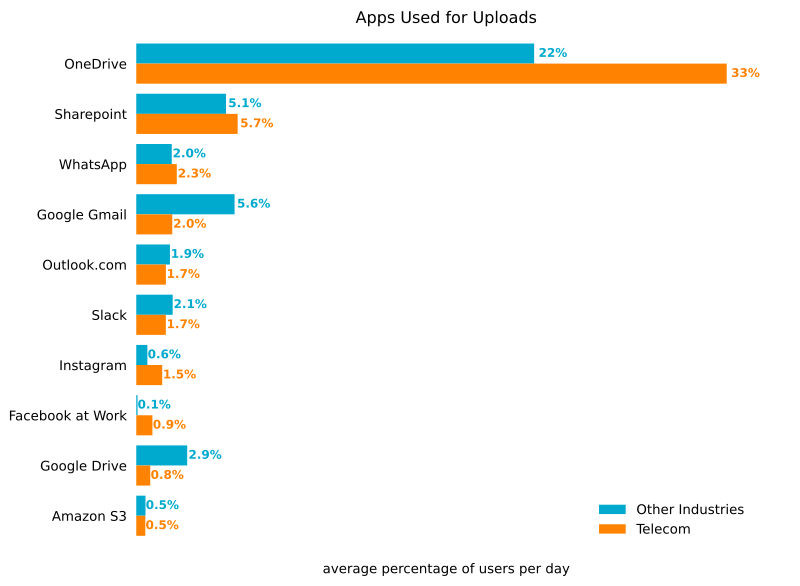
Unsurprisingly, uploads to Microsoft OneDrive are more common in telecom compared to other industries, the results of the increased popularity of that app, while uploads to Google Gmail and Google Drive are less common. Files are uploaded to other apps at rates that are comparable to other industries.
Top Apps Used for Downloads
Similarly, telecom also stands out for having more users downloading files from OneDrive and SharePoint than other industries. Of the cloud storage solutions provided by the big three IaaS cloud providers, Google Cloud Storage is more popular, Amazon S3 is as popular, and Azure Blob Storage is less popular compared to other industries.

Cloud App Abuse
Cloud Malware Delivery
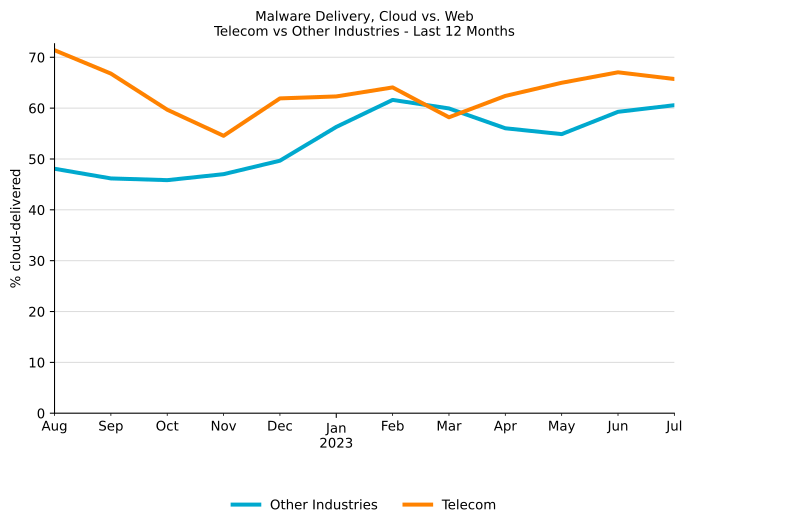
The popularity of cloud malware delivery in telecom has remained consistently high for the past 12 months, spending most of that period between 60% and 70%. On average, 62% of malware downloads in telecom came from cloud apps, compared to 53% in other industries. Abusing cloud apps for malware delivery enables attackers to evade security controls that rely primarily on domain block lists and URL filtering, or that do not inspect cloud traffic.
 Compared to other industries, telecom is tied with financial services for being the industry with the highest percentage of malware downloads from the cloud over the past 12 months.
Cloud Apps Abused for Malware Delivery
In the last 12 months, Microsoft OneDrive was the most popular cloud app abused for malware downloads in the telecom industry, representing 29% of all cloud malware downloads, compared to 22% in other industries. As highlighted earlier in this report, Microsoft OneDrive is also the most popular app among users in telecom, which makes it both an useful app for attackers seeking to target a wide variety of organizations using the same app, and also makes it more likely that the malicious payloads would reach their targets. Other top apps for malware downloads include free software hosting sites (GitHub), collaboration apps (SharePoint), free web hosting services (Weebly, Squarespace), cloud storage apps (Azure Blob Storage, Google Drive, MediaFire), and webmail apps (Outlook.com, Google Gmail).

Malware & Ransomware
Top Malware Types
The most common malware type detected by Netskope in the telecom industry in the last 12 months were Trojans, which are commonly used by attackers to gain an initial foothold and deliver other types of malware, such as infostealers, remote access Trojans, backdoors, and ransomware. The second most common were file-based exploits. Rounding out the top five are infostealers, backdoors, and downloaders. File-based exploits, backdoors, and downloaders were all much more common in the telecom industry compared to other industries.

Top Malware & Ransomware Families
This list contains the top 10 malware and ransomware families detected by Netskope targeting users in the telecom industry in the last 12 months: Adware.Bundlore (a.k.a. SurfBuyer) is an OSX adware installer that has circulated in many forms including Flash player installers, hidden scripts, and browser plugins. Adware.Pirrit is an adware installer for OSX that has been around since 2016 that continues to circulate. Backdoor.Zusy (a.k.a. TinyBanker) is a banking Trojan based on the source code of Zeus, aiming to steal personal information via code injection into websites. Infostealer.AgentTesla is a .NET-based Remote Access Trojan with many capabilities, such as stealing browsers’ passwords, capturing keystrokes, clipboard, etc. Infostealer.PonyStealer (a.k.a. Fareit) is a malware able to steal passwords from hundreds of applications, including web browsers, emails, messaging apps, and FTP. Phishing.PhishingX is a malicious PDF file used as part of a phishing campaign to redirect victims to a phishing page. Ransomware.Ako (a.k.a. MedusaLocker) is a RaaS (ransomware-as-a-service) group active since 2019. Trojan.FormBook (a.k.a. XLoader) is a malware that provides full control over infected machines, offering many functionalities such as stealing passwords and executing additional malware. Trojan.Razy is a Trojan typically distributed via malicious ads disguised as legitimate software, often used to steal cryptocurrency data. Trojan.Valyria (a.k.a. POWERSTATS) is a family of malicious Microsoft Office Documents that contain embedded malicious VBScripts usually to deliver other malicious payloads.
Recommendations
This report highlighted increasing cloud adoption, including increases of data being uploaded to and downloaded from a wide variety of cloud apps. It also highlighted an increasing trend of attackers abusing a wide variety of cloud apps, especially popular enterprise apps, to deliver malware to their victims. The malware samples were primarily Trojans, but also included downloaders, backdoors, file-based exploits, ransomware, and infostealers. Netskope Threat Labs recommends organizations in the telecommunications industry review their security posture to ensure that they are adequately protected against these trends:
- Inspect all HTTP and HTTPS downloads, including all web and cloud traffic, to prevent malware from infiltrating your network. Netskope customers can configure their Netskope One NG-SWG with a Threat Protection policy that applies to downloads from all categories and applies to all file types.
- Ensure that high-risk file types like executables and archives are thoroughly inspected using a combination of static and dynamic analysis before being downloaded. Netskope Advanced Threat Protection customers can use a Patient Zero Prevention Policy to hold downloads until they have been fully inspected.
- Configure policies to block downloads from apps and instances that are not used in your organization to reduce your risk surface to only those apps and instances that are necessary for the business.
- Configure policies to block uploads to apps and instances that are not used in your organization to reduce the risk of accidental or deliberate data exposure from insiders or abuse by attackers.
- Use an Intrusion Prevention System (IPS) that can identify and block malicious traffic patterns, such as command and control traffic associated with popular malware. Blocking this type of communication can prevent further damage by limiting the attacker’s ability to perform additional actions.
- Use Remote Browser Isolation (RBI) technology to provide additional protection when there is a need to visit websites that fall into categories that can present higher risk, like Newly Observed and Newly Registered Domains.
Netskope Threat Labs
Staffed by the industry’s foremost cloud threat and malware researchers, Netskope Threat Labs discovers, analyzes, and designs defenses against the latest cloud threats affecting enterprises. Our researchers are regular presenters and volunteers at top security conferences, including DefCon, BlackHat, and RSA.
About This Report
Netskope provides threat protection to millions of users worldwide. Information presented in this report is based on anonymized usage data collected by the Netskope One platform relating to a subset of Netskope customers with prior authorization. This report contains information about detections raised by Netskope One Next Generation Secure Web Gateway (SWG), not considering the significance of the impact of each individual threat. Stats in this report are based on the period starting August 1, 2022 through July 31, 2023. Stats are reflection of attacker tactics, user behavior, and organization policy.