
In This Report
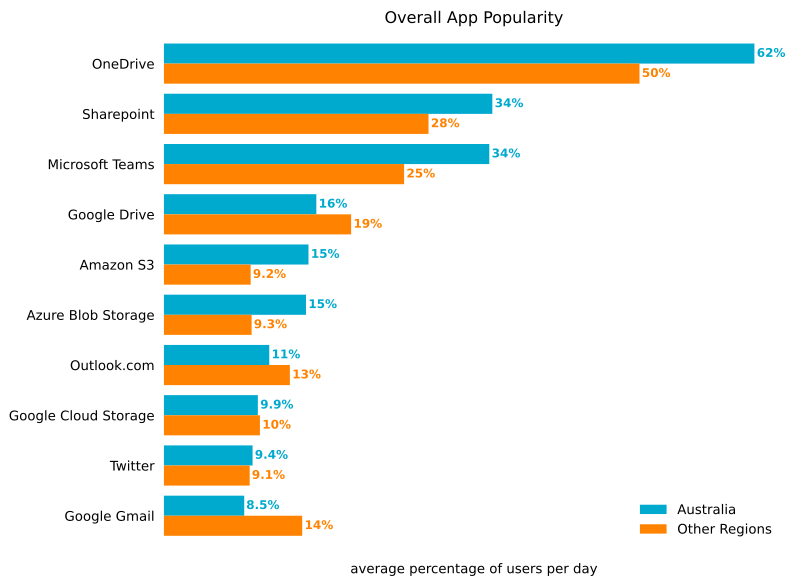
Cloud App Adoption: With 62% of usage, Microsoft OneDrive is the most popular app used in Australia, followed by Sharepoint and Microsoft Teams, both with 34% of usage. When it comes to uploading and downloading data OneDrive is also the leader with 30% and 32% of daily usage respectively.
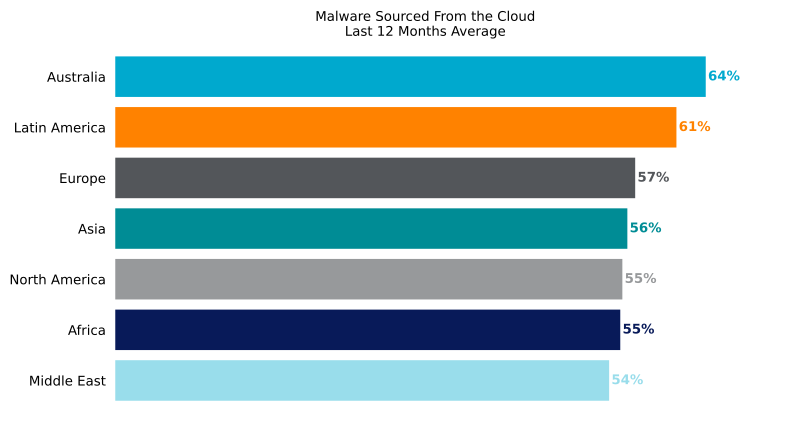
Cloud App Abuse: 64% of malware downloads in Australia come from cloud apps, more than any other region. Among the top cloud apps with malware downloads are Microsoft OneDrive, SharePoint, and GitHub.
Malware & Ransomware: Attackers primarily targeted users in the Australia region with Trojans to trick them into downloading other malware payloads. FormBook and Valyria were among the top Trojans, while other common malware families included the infostealer AgentTesla, the famous Emotet botnet, and the Sodinokibi ransomware.
Cloud App Adoption
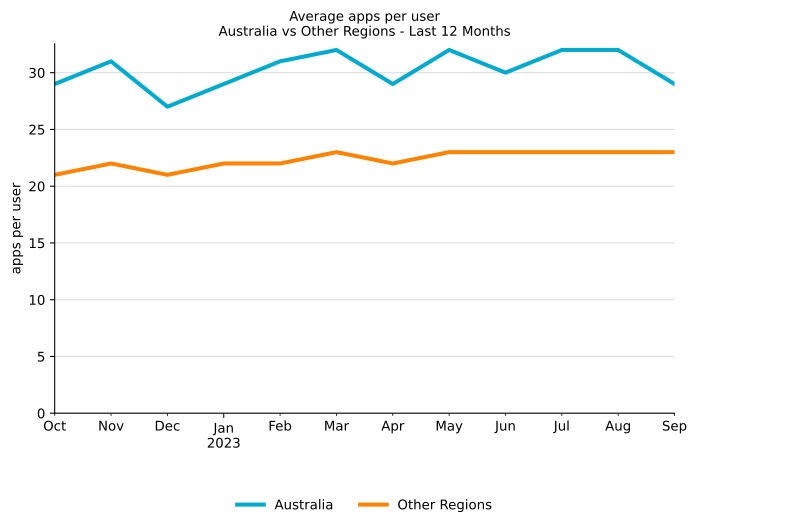
Although the cloud app adoption rate didn’t grow in Australia when compared to the previous year, it still leads all other regions, with an average of 30 apps used by each user. The top 1% of users interacted with 100 apps per month on average, while users in other regions interacted with 94 apps.
 Unsurprisingly, Australia also leads other regions in terms of the number of users downloading and uploading data from cloud apps. 97% of users download data from cloud apps each month, compared to 93% for other regions. 78% of users upload data to cloud apps each month, compared to 65% in other regions.

Most Popular Cloud Apps
As it is in most industries, OneDrive is the most popular app in Australia. It is even more popular than in other regions with 62% of users accessing OneDrive daily compared to 50% in other regions. Microsoft apps like SharePoint and Microsoft Teams also show a high usage of 34%.
Top Apps Used for Uploads
As expected, with Microsoft OneDrive being the most popular app by a large margin, it is also the app most used for uploading data, with 30% of users uploading data to OneDrive daily.

Top Apps Used for Downloads
OneDrive is also the most popular app for downloads in Australia, with 32% of users preferring it for download. Amazon S3 and Azure Blob Storage also stand out with 14% of users downloading data from them, compared to 8.3% in other regions.

Cloud App Abuse
Cloud Malware Delivery
The popularity of cloud malware delivery in Australia increased considerably in the past 12 months. While other regions remained consistent, Australia had fast growth from November 2022 to February 2023, and kept the high percentage between 68% and 79% with a slight decrease in August and September, but still higher than other regions. The usage of cloud apps allows malware to fly under the radar and to evade regular security controls that rely on tools such as domain block lists or that do not inspect cloud traffic.
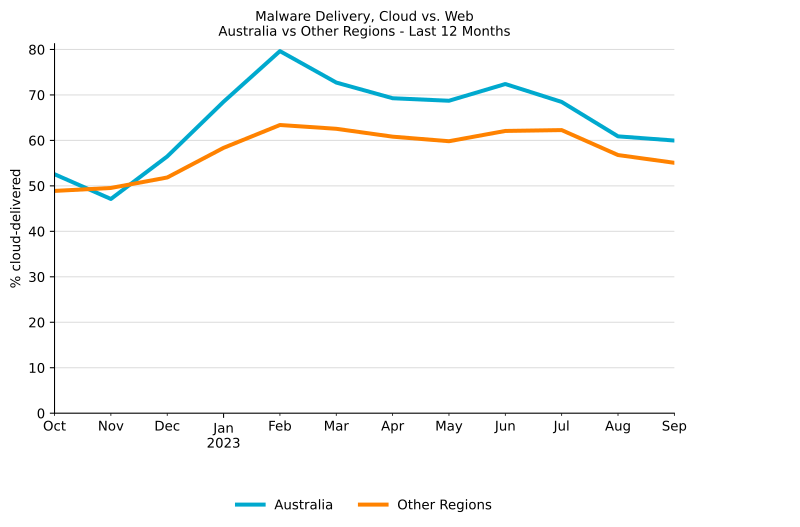 Compared to other regions, Australia has the highest percentage of cloud malware downloads, followed by Latin America and Europe.
Cloud Apps Abused for Malware Delivery
In addition to OneDrive being the top overall app for downloads in Australia, it is also the top app for malware downloads. Such malware downloads typically take the form of an attacker using OneDrive to host malware and sharing the malware with their victims. Occasionally, a user may inadvertently upload an infected file to a shared location that results in malware spreading within an organization.
Followed by OneDrive is SharePoint. With 18%, SharePoint exceeds other regions by approximately double. In third place, and also showing close to double the percentage, is GitHub, with 12%.
As highlighted earlier in this report, Microsoft OneDrive and SharePoint, for example, are very popular apps among users in Australia, which makes them both useful apps for attackers seeking to target a wide variety of organizations using the same app, and also makes it more likely that the malicious payloads would reach their targets.

Malware & Ransomware
Top Malware Types
The most common types of malware that Netskope users attempted to download from the web or cloud were Trojans, which are commonly used by attackers to gain an initial foothold and deliver other types of malware, such as infostealers, remote access Trojans, backdoors, and ransomware. Detecting and blocking Trojans can prevent malware infections that would result in other malicious payloads being installed. All other types of malware make up a comparatively small percentage of the total, which is the same as in other regions.

Top Malware & Ransomware Families
This list contains the top 10 malware and ransomware families detected by Netskope targeting users in Australia in the last 12 months: Infostealer.AgentTesla is a .NET-based Remote Access Trojan with many capabilities, such as stealing browsers’ passwords, capturing keystrokes, clipboard, etc. Downloader.Cerbu is a malware that can download and execute other malware as well as maintain persistence in the infected system. Botnet.Emotet is one of the most relevant botnets in the cyber threat landscape, often used to deliver other malware, such as TrickBot. Trojan.FormBook (a.k.a. XLoader) is a malware that provides full control over infected machines, offering many functionalities such as stealing passwords and executing additional malware. Botnet.IcedID is a very popular botnet that has been around since 2017. It is often used to steal personal data, credentials, banking information and also to download and execute other payloads such as Cobalt Strike. Phishing.PhishingX is a malicious PDF file used as part of a phishing campaign to redirect victims to a phishing page. Infostealer.RedLine is a malware designed to steal data such as credit card numbers, passwords, VPN and FTP credentials, gaming accounts, and even data from crypto wallets. Downloader.SLoad (a.k.a Starslord) is a download that is often used to deliver Ramnit. Ransomware.Sodinokibi (a.k.a REvil) is a Ransomware that was first flagged on April 17, 2019 and is known for being used by the GOLD SOUTHFIELD threat group. Trojan.Valyria (a.k.a. POWERSTATS) is a family of malicious Microsoft Office Documents that contain embedded malicious VBScripts usually to deliver other malicious payloads.
Recommendations
This report highlighted increasing cloud adoption, including increases of data being uploaded to, and downloaded from, a wide variety of cloud apps. It also highlighted an increasing trend of attackers abusing a wide variety of cloud apps, especially popular enterprise apps, to deliver malware (mostly Trojans) to their victims. Netskope Threat Labs recommends organizations in the Australia region review their security posture to ensure that they are adequately protected against these trends:
- Inspect all HTTP and HTTPS downloads, including all web and cloud traffic, to prevent malware from infiltrating your network. Netskope customers can configure their Netskope NG-SWG with a Threat Protection policy that applies to downloads from all categories and applies to all file types.
- Ensure that high-risk file types like executables and archives are thoroughly inspected using a combination of static and dynamic analysis before being downloaded. Netskope Advanced Threat Protection customers can use a Patient Zero Prevention Policy to hold downloads until they have been fully inspected.
- Configure policies to block downloads from apps and instances that are not used in your organization to reduce your risk surface to only those apps and instances that are necessary for the business.
- Configure policies to block uploads to apps and instances that are not used in your organization to reduce the risk of accidental or deliberate data exposure from insiders or abuse by attackers.
- Use an Intrusion Prevention System (IPS) that can identify and block malicious traffic patterns, such as command and control traffic associated with popular malware. Blocking this type of communication can prevent further damage by limiting the attacker’s ability to perform additional actions.
- Use Remote Browser Isolation (RBI) technology to provide additional protection when there is a need to visit websites that fall into categories that can present higher risk, like Newly Observed and Newly Registered Domains.
Netskope Threat Labs
Staffed by the industry’s foremost cloud threat and malware researchers, Netskope Threat Labs discovers, analyzes, and designs defenses against the latest cloud threats affecting enterprises. Our researchers are regular presenters and volunteers at top security conferences, including DefCon, BlackHat, and RSA.
About This Report
Netskope provides threat protection to millions of users worldwide. Information presented in this report is based on anonymized usage data collected by the Netskope One platform relating to a subset of Netskope customers with prior authorization. This report contains information about detections raised by Netskope One Next Generation Secure Web Gateway (SWG), not considering the significance of the impact of each individual threat. Stats in this report are based on the period starting October 1, 2022 through September 30, 2023. Stats are a reflection of attacker tactics, user behavior, and organization policy.